AXIT Research Markets
The Palm, Printer and Puppet: What Unitree's RMB 845 Closing Price Assumes.
The Palm
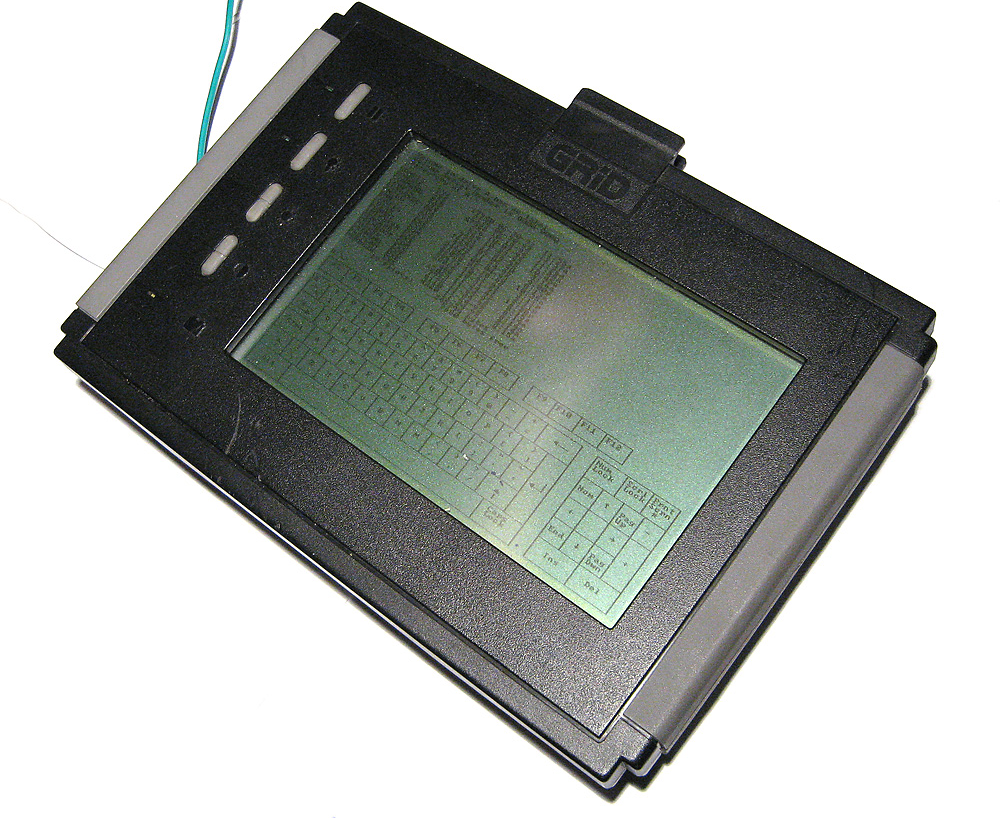
Palm Computing, Inc., was founded in 1992 by Jeff Hawkins. He founded Palm on the heels of the GRiDPad, an early pen-based tablet that sold modestly but never found a mass market. Convinced that the large form factor played into the middling results, Hawkins turned to a block of wood for inspiration.
"I just walked around, imagining what I might use it for."
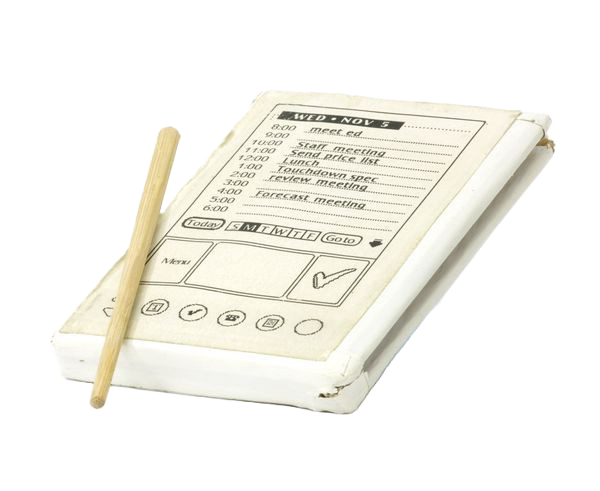
He decided his next device should fit in a shirt pocket, glued a paper screen onto a small block of wood, and carried it around to test which uses fit his lifestyle. In effect, Hawkins was putting form before function: testing functional answers to his hypothesis on form.
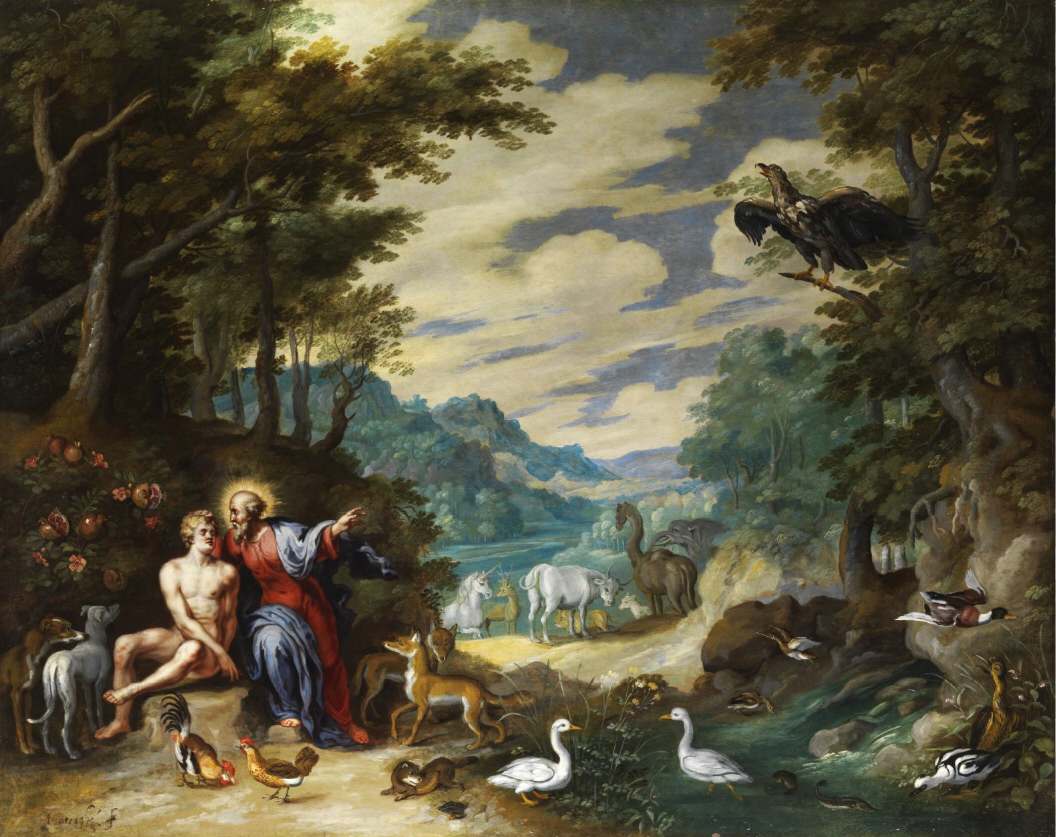
Form before function has been the operating premise of humanoid development thus far. The world was built around humans, so it follows that in an antediluvian sense a general-purpose robot should be built in our image. However, until now, the hardware to grant humanoids sufficient function has been prohibitively expensive and unreliable. The technology to drive proper humanoid task-completion has only recently become mainstream. The hardware is now capable, but the question of sizing the humanoid labor market still hinges on a successful search for function.
With Palm, the underlying technology was already present when Hawkins had his epiphany about form. The GRiDPad was a fully capable tablet computer, one of the first of its kind. It didn't serve any particular user well, though. The GRiDPad was large and expensive while most of its users were better served by other computing formats. The most scalable and profitable use cases for humanoids are also currently served by other formats.
The block of wood forced Hawkins to wrestle with the question of function. The GRiDPad was historically significant and technically impressive, sure, but nobody needed one. The smaller size forced him to distill what people would actually use a pen device for. He landed on a pocket organizer. That organizer became the Palm Pilot, poster child for the PDA category and a direct ancestor of the modern smartphone.
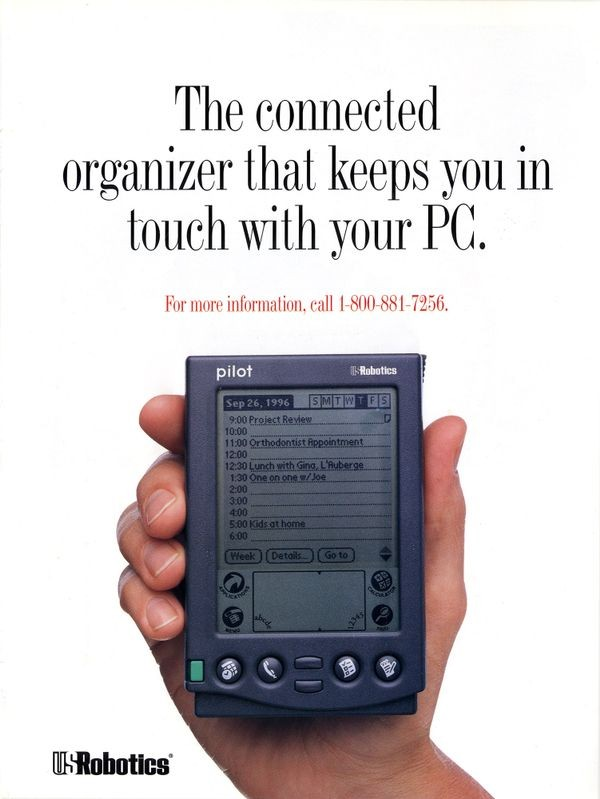
The Unitree H1 is the GRiDPad of humanoids: a large and expensive general-purpose development kit, proof that the tech is there but not that it's useful. The G1 is the block of wood. It sold a record 5,511 units in 2025, most of them a novelty model with prop hands, not dissimilar to Hawkins' wood block with a pasted screen.
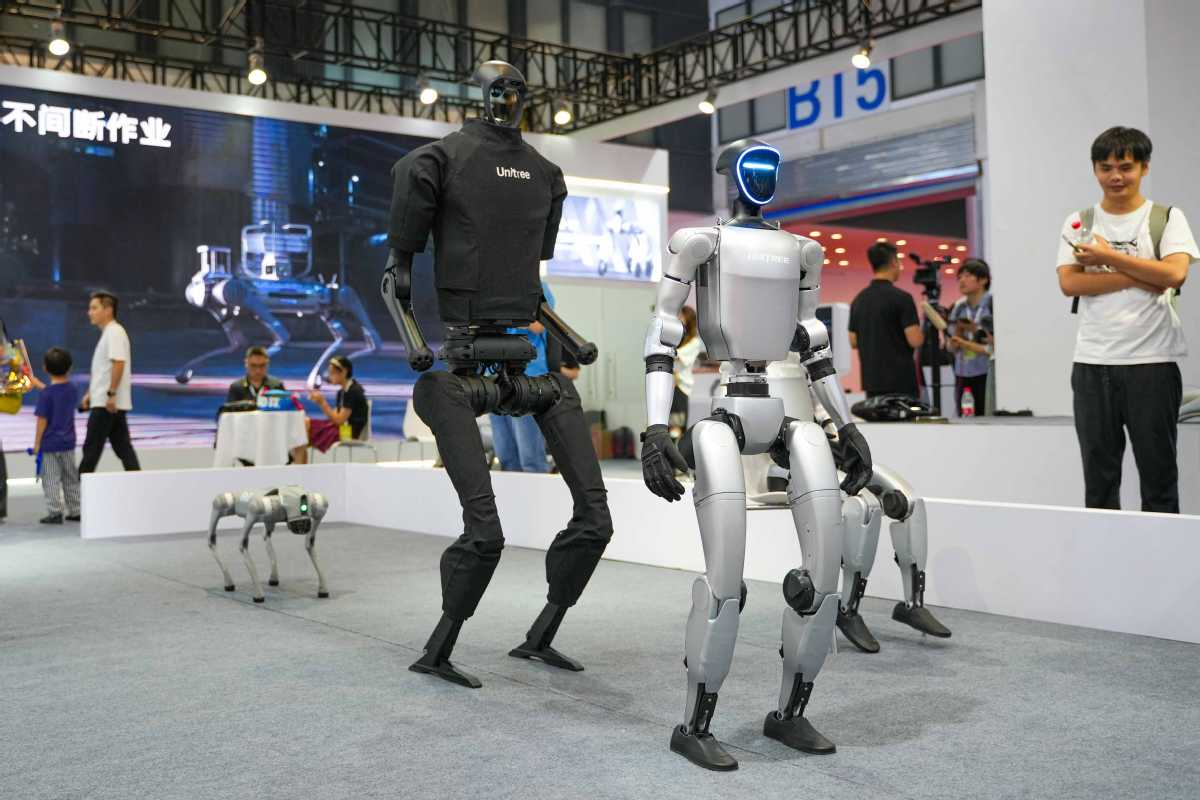
Neither Unitree nor its customers have landed on the right function yet. Humanoids have not had their Pilot or iPhone moment. Palm did have its moment, and the stock still ran far ahead of the business. Upon release in 1996, the Palm Pilot became the fastest-selling computer ever made. Four years later, on March 2, 2000, Palm's parent company, 3Com, sold about 5% of Palm at $38 a share.
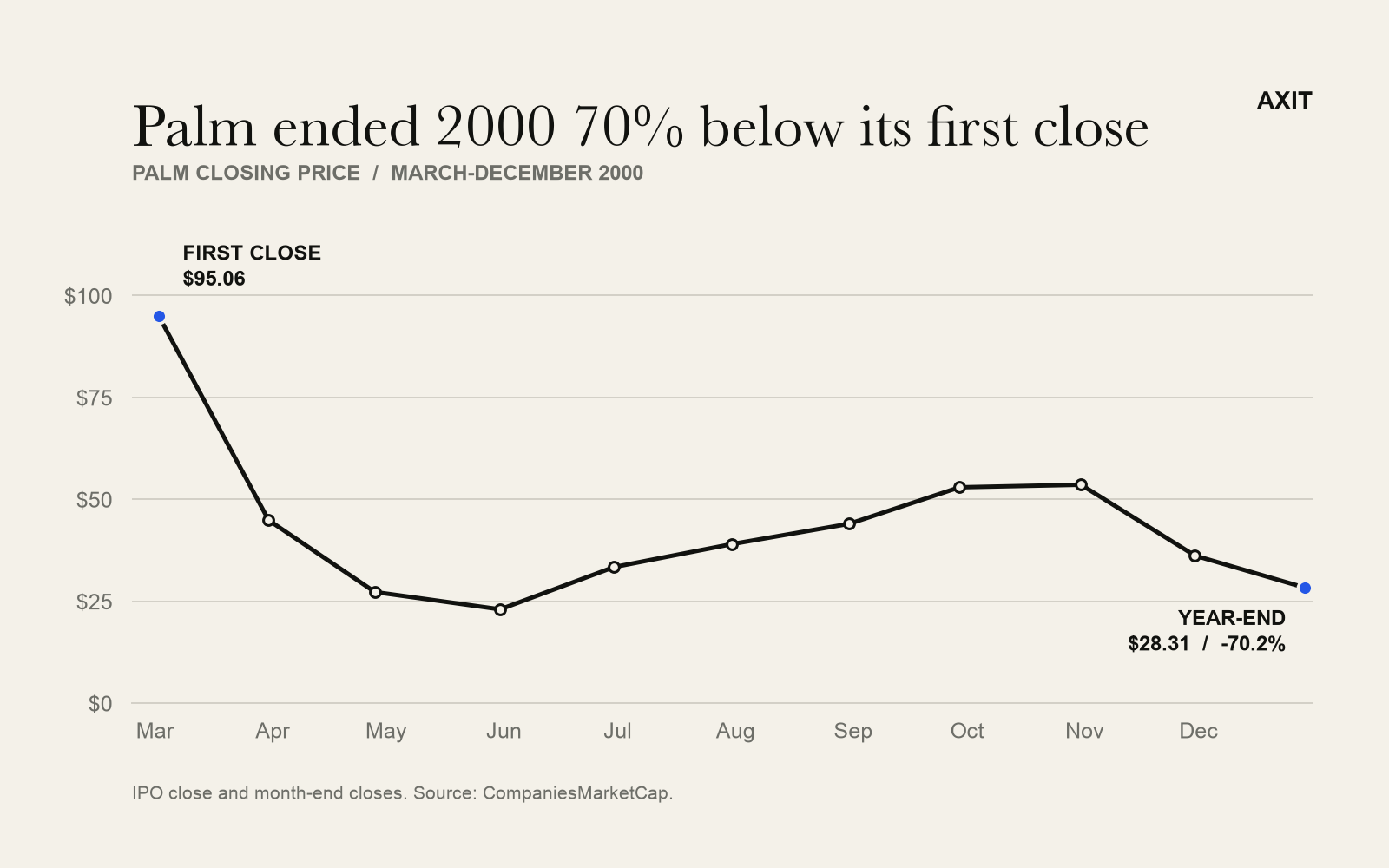
On day one, the stock opened above $145, touched $165, and closed at $95. Palm's market cap was $53 billion. 3Com, which still owned the other 95% of Palm, closed at a market cap of $28 billion. The market was saying that 3Com's entire networking business, plus its cash, plus its 95% stake in Palm, was worth $25 billion less than Palm alone. Since that stake was itself worth about $50 billion, the rest of 3Com was being valued at roughly negative $22 billion. The mispricing was all the stranger because 3Com had already announced plans to distribute the remaining Palm shares to its own shareholders within about six months.
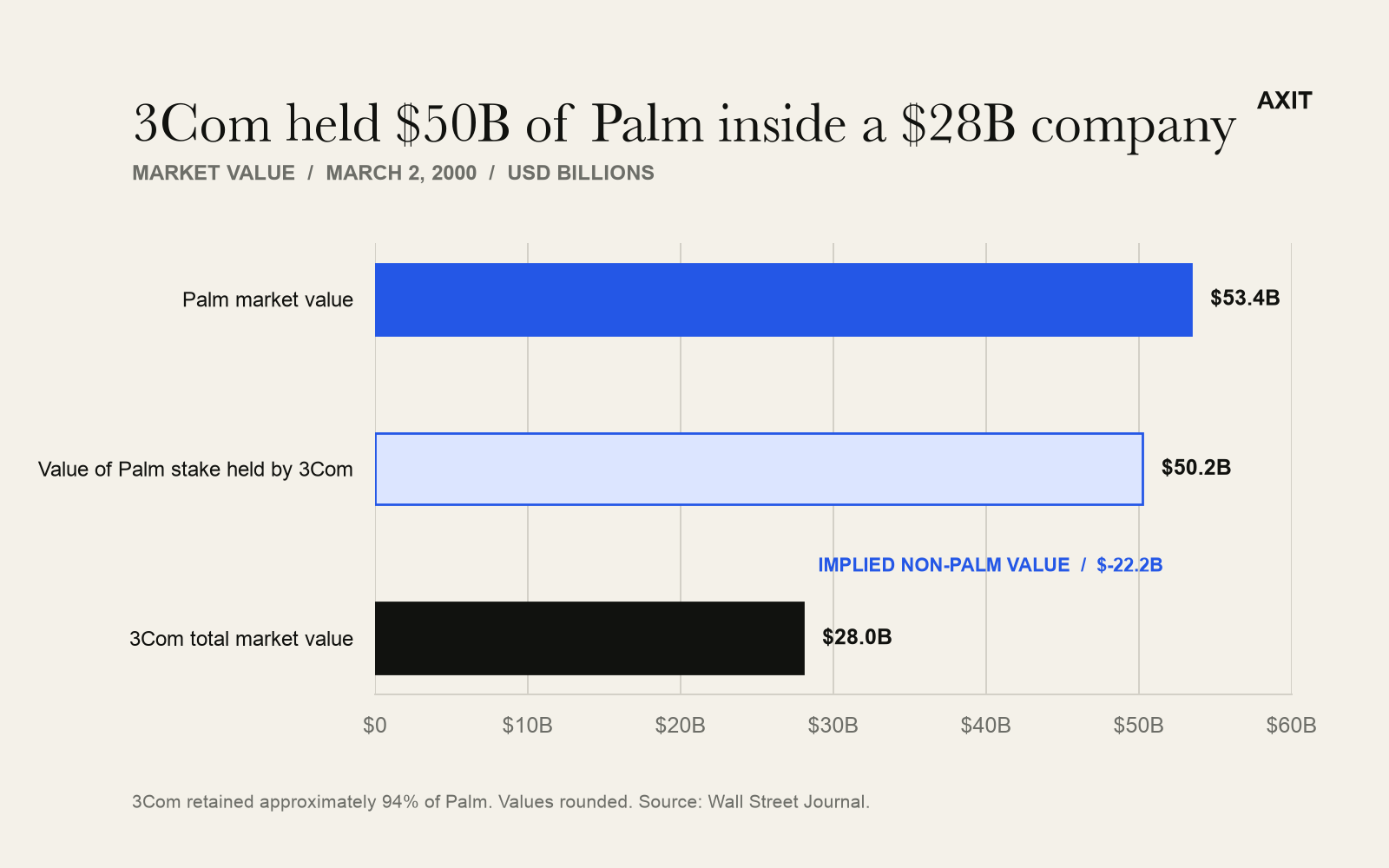
The arbitrage was obvious: buy 3Com, short Palm, collect 1.5 Palm shares per 3Com share in July. It couldn't be executed because there were no Palm shares to borrow. With a 5% float and no shorting, the price wasn't the market's average opinion of Palm. It was the opinion of the most optimistic buyers of a tiny supply, and nobody with a contrary view could act on it. On July 27, 2000, 3Com distributed its Palm shares to its own shareholders. Overnight, the float went from 5% to 100%. By the end of the year, with no change to the business, Palm had drifted 75% below its first-day close.
On August 19, 2026, Unitree sold 10% of itself, all new shares. A fifth of the offering went to strategic investors with 12-to-36-month lockups, and Shanghai's STAR Market rules freeze part of the institutional allocation for six months, so about 8% of the company can trade. A-shares cannot be shorted at scale, and a fresh STAR listing cannot be borrowed at all in practice. Same structure as Palm: small float, no borrow, and a price set by the marginal optimist.
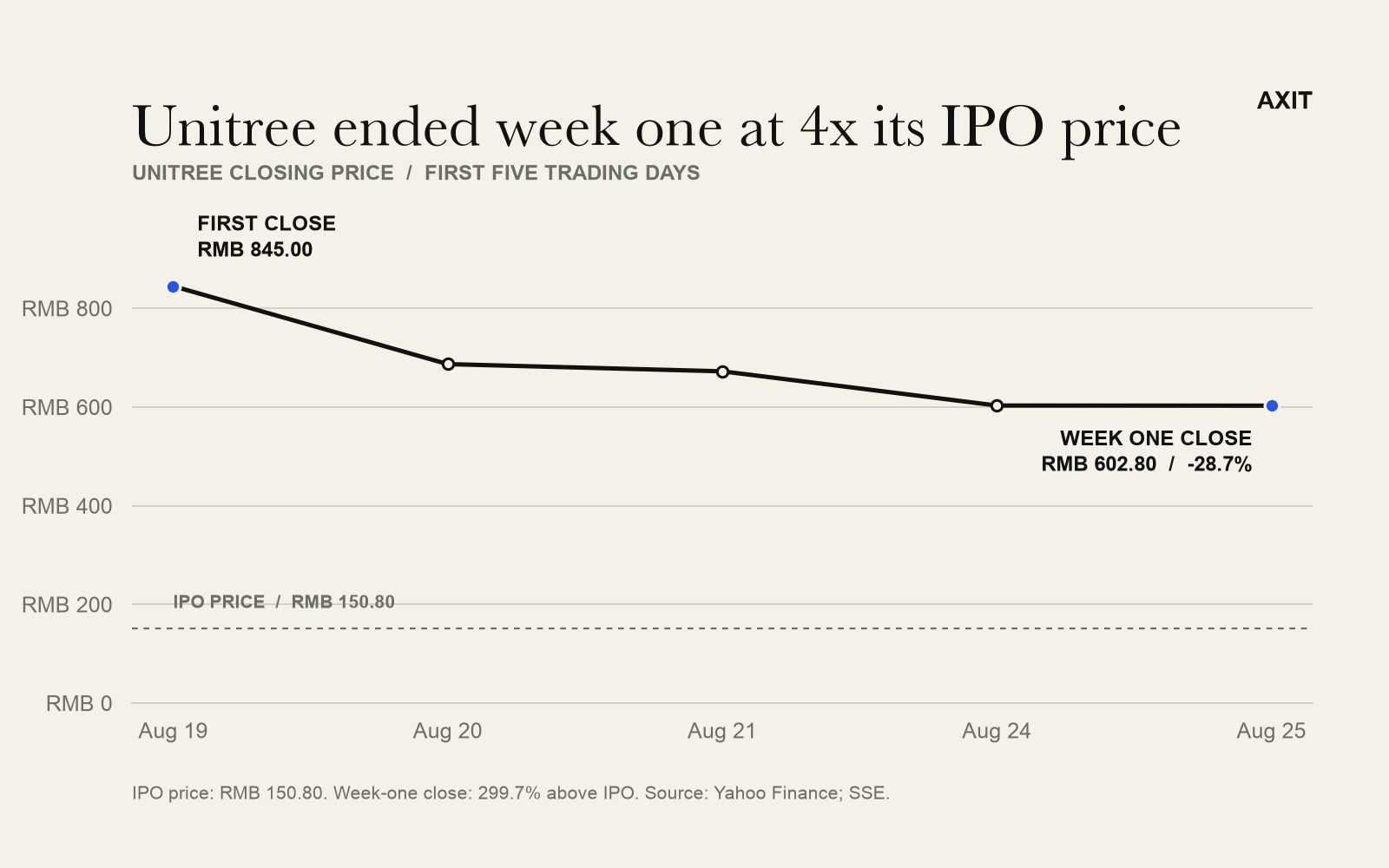
Palm's $53 billion was $95 times every share, including the 95% that couldn't trade. Unitree's RMB 342 billion is RMB 845 times every share; the stock that can actually change hands is worth about RMB 25 billion. The other 92% is marked at a price its holders cannot realize until the unlocks: September 2027 for roughly a third of the locked shares, mid-2028 for Tencent and CITIC, and September 2029 for the founder and DeepSeek.
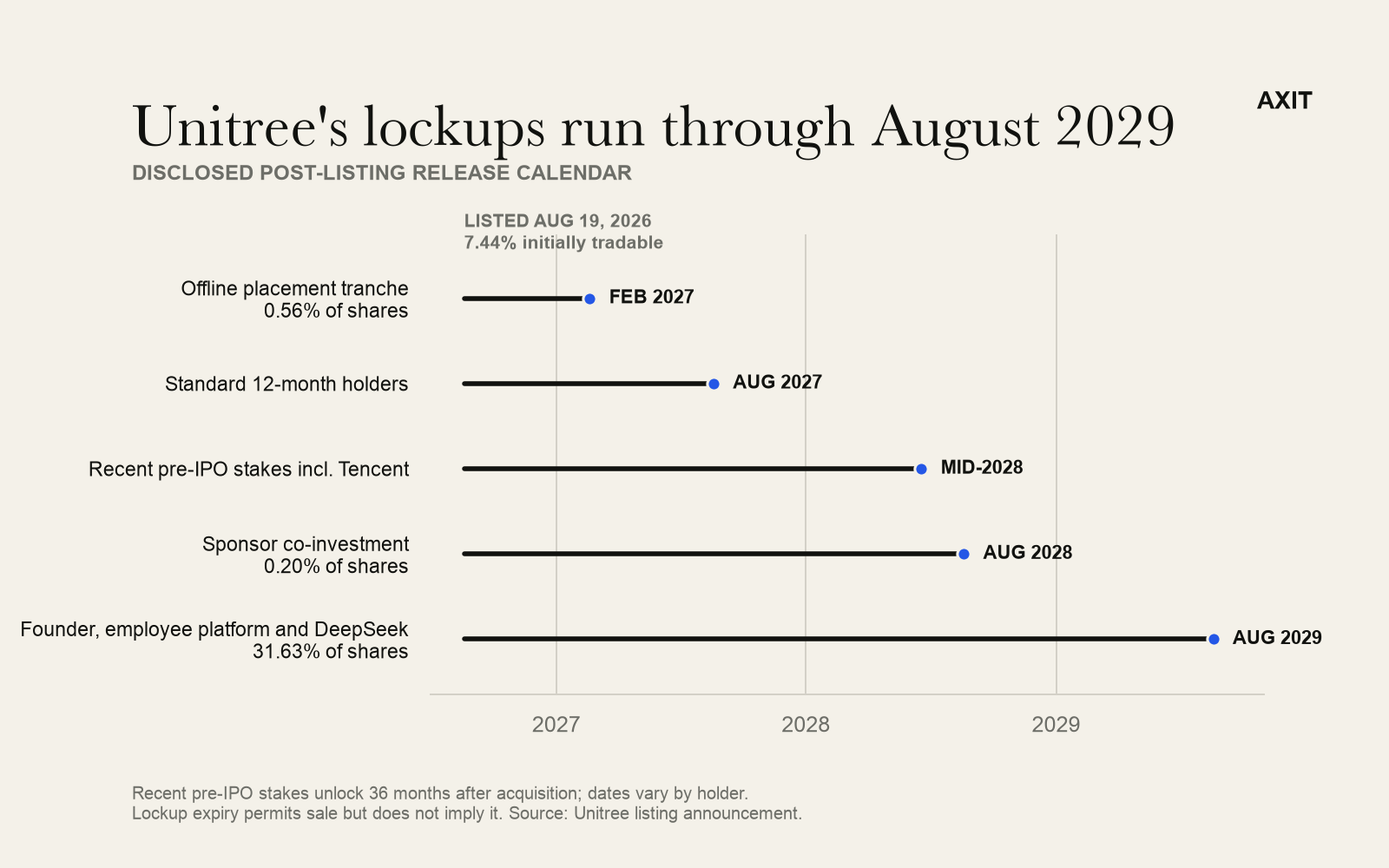
Unitree's price will be reset toward the business's standalone value each time a new supply of shares arrives, starting September 2027. Palm had a real product underneath it, and even after the July 2000 repricing the stock held a floor for a time. Does Unitree have a floor? Its robot dogs, about 40% of revenue, are a mature product. Its humanoids are not. Until there is strong demand for humanoids, Unitree won't have the baseline value Palm had.
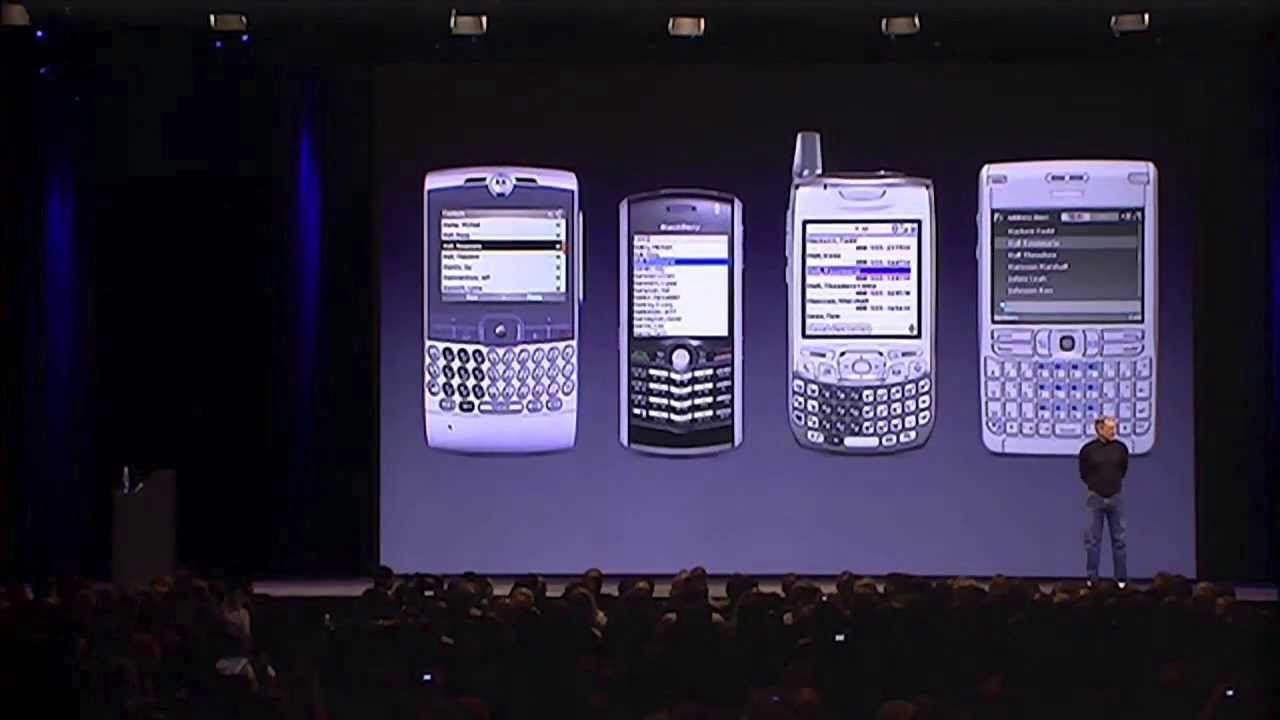
But even Palm's PDA wasn't mature. The value floor held for two years, until another company answered the function question better than Hawkins. BlackBerry put phone and email in a Palm form factor.
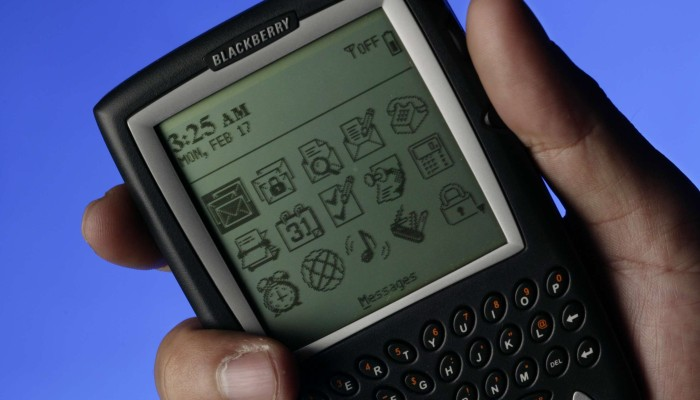
Palm's maturity was interim maturity: reasonably useful but not safe from a better product. A term annuity with a hazard rate, not a perpetuity. The cash flows were real while they lasted; the horizon was set by the arrival of the better answer, which came from outside.
Palm started 2002 around $4 a share and drifted down through the summer. By late July it was at $1.15, more than 99% below its IPO-day high of $165. On August 5 it closed at $0.97, a market cap of about $560 million, down from $53 billion on the first day of trading. Palm became a penny stock.
Unitree's current offerings should be treated as mature only in the interim. A better humanoid may arrive, one built for a purpose, with capabilities beyond dances and handshakes. In its own IPO prospectus, Unitree concedes it has done little data collection or task training.
"Previously, when technical routes and application requirements were not yet fully defined, the Company maintained a prudent approach toward data collection and real-world scenario training, conducting real-world data collection and factory-deployment pilot programs on a relatively small scale."
Unitree focused on advancing the capabilities of the form, not on selling function. Embodied AI looks likely to be as revolutionary as handheld computing was. The space will be hypercompetitive, though, and Unitree's interim maturity as an early mover is not necessarily enough to warrant the price the market has put on it.
The Printer
According to the US government, though, Unitree has no competitors, at least in the United States.
On May 30, 2025, the Commissioner of Customs accepted an application from the Trustees of Purdue University to import an instrument under docket 25-031: a Unitree humanoid robot, manufactured by Hangzhou Yushu Technology Co., Ltd., China. The Commerce Department published the notice that August under the Educational, Scientific and Cultural Materials Importation Act of 1966. The justification Purdue gave was the standard one:
"No instruments of the same general category manufactured in the United States."
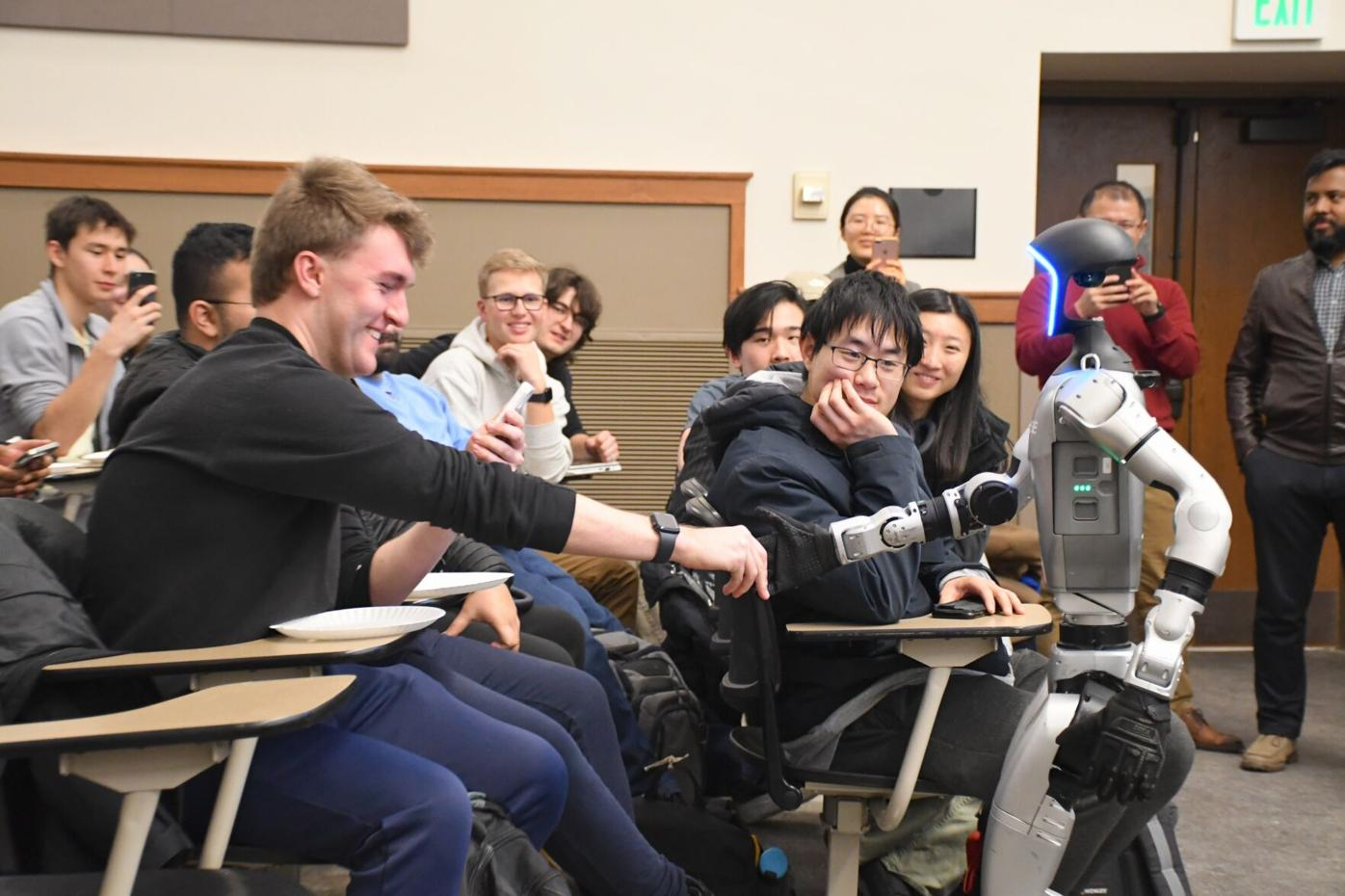
That sentence appears hundreds of times a year in the Federal Register, next to Finnish dilution refrigerators and Czech electron microscopes and Japanese microprobes. It's the routine language of American science importing the world's best tools duty-free. In 2025, a humanoid robot joined the list. No American manufacturer filed to say otherwise.
Fourteen months later, the FCC barred any new foreign model of the same instrument from the country:
Advanced robotic devices produced in foreign countries (regardless of the nationality of the producer) presented the following unacceptable risks: (i) "posing a supply chain vulnerability that could disrupt U.S. economic and national security"; and (ii) "creating a cybersecurity risk that threatens the security of critical infrastructure and thus the safety and security of U.S. persons."
The robots produced on US soil are not being sold to labs, and barely being produced at all. Figure shipped 150 through the end of 2025 and works exclusively with enterprise clients, as an operator rather than a seller.
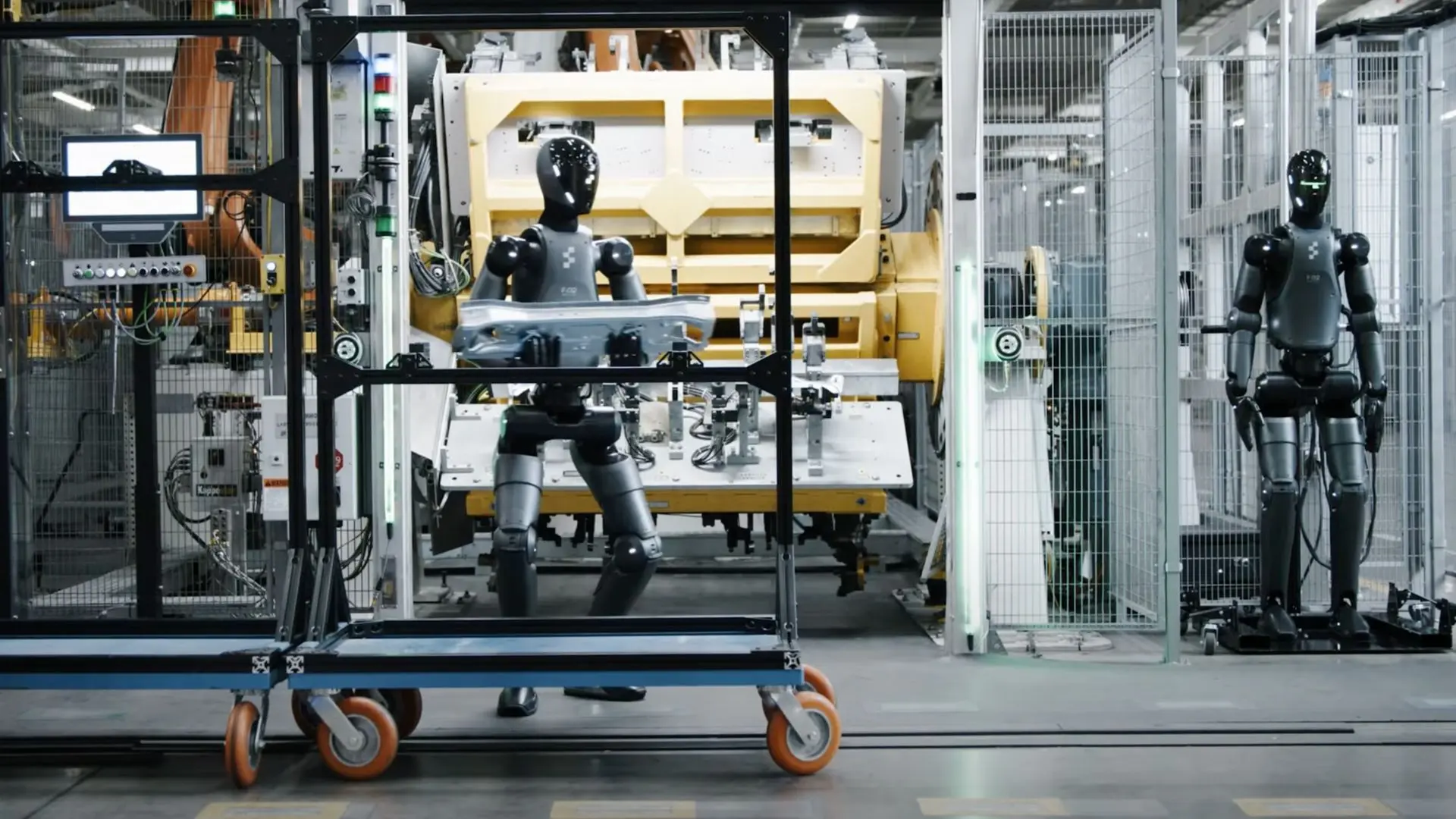
The printing press commodified the skills of a scribe, a role symbolic of the incredible dexterity of a hand. After the printing press came the printer. The commercial humanoid is the generalization of what electronic printing pioneered, commodifying all forms of advanced human manipulation.
The Xerox 914, released in 1959, was the first plain-paper copier, and it ushered in a new era of printing for businesses. The machines were expensive and prone to catching fire, and Xerox, like Figure, would not sell them. It placed them with clients as an operator.
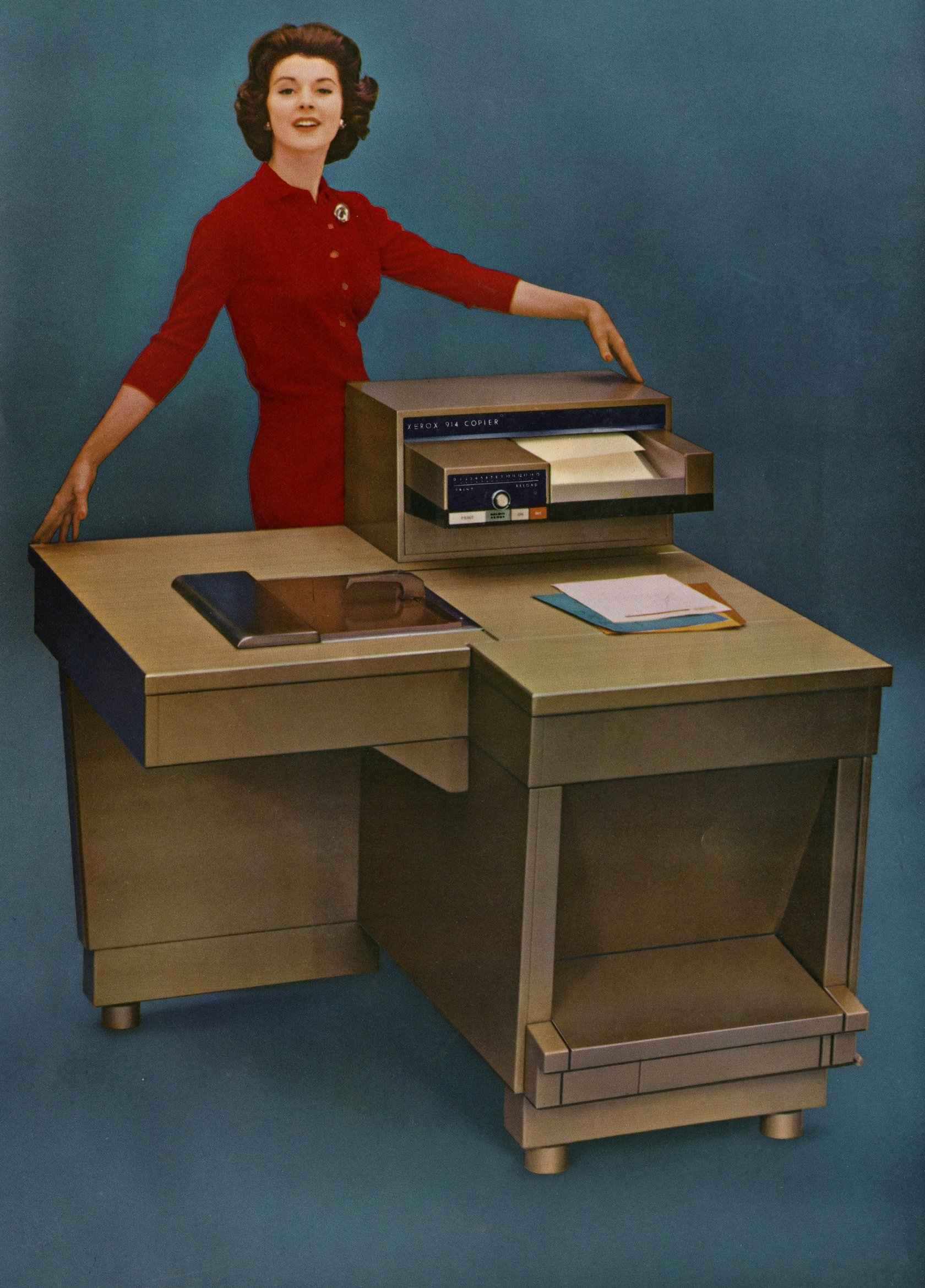
Xerox pioneered a lease and pay-per-copy model. The high cost of the machine made traditional sales difficult. Instead, they rented the copiers for a low monthly fee, charging a per-copy fee for usage above a set limit. An operational model not dissimilar from that of conventional labor.
The moment a machine of similar quality could be bought outright for a fraction of the lease cost, the customer's calculation flipped. In 1975, the FTC forced Xerox to license its patents and to sell as well as lease. Canon, Ricoh, and Savin walked through the door with offerings.
Canon sold the box through dealers and let the customer figure out what to do with it. The seller model. No meter, no technicians on the payroll, no title retained, no share of the surplus the customer found. Just a price. Xerox's share fell from over 90% to under half in a decade, not because Canon's copier was better, but because a customer who knew how many copies it needed would rather own the machine than rent the copies. Once the use is known and the box is cheap, leasing loses to buying, just like a company that knows its workload hires rather than temps.
Figure, Agility, and Tesla are operators. The body is rented as a service, the brain is proprietary, the fleet belongs to the maker, and the maker chooses the customer. Tesla's customer is Tesla. Figure's is BMW. None of them puts a humanoid on a graduate student's bench, because the operator model has no reason to.
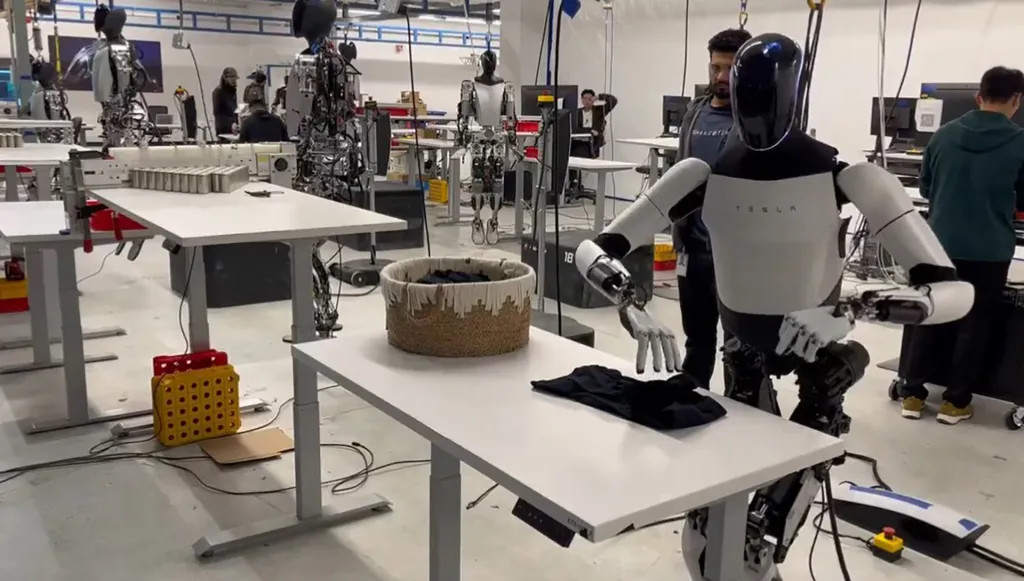
Unitree is the seller. Its humanoid is a line item on a purchase order, from RMB 29,900, and its customer, whether a lab, a rental company, a distributor, or a competitor, owns the machine and everything it discovers with it. That's why Purdue could file docket 25-031 for a Unitree and could not have filed it for a Figure. There is no price at which a Figure 02 is for sale.
The two models are not competing for the same moment. The operator model wins while the function is unknown and the machine is scarce, which is now. The seller model wins once the use is found and the box is cheap, which is the moment the operators are working toward and the seller is already positioned for. The market paid around fifty times earnings for Xerox's meter in 1972 and an ordinary multiple by 1985. The pattern with leased machines, from the 914 to IBM's mainframes, is that the lessor's premium ends when someone sells the body, and the surplus the meter had been collecting goes to the customer.
The question for a humanoid investor is not which model is right. It's which one is right when the function is found. The operators are betting the discovery happens inside their pilots. The seller is betting it happens in a lab that bought the box, on a machine nobody is charging by the hour for.
In 1984, the instrument no American sold was Canon's laser engine. HP bought it for the LaserJet. Apple bought it too, put Adobe's PostScript on it, and sold it as the LaserWriter. Desktop publishing was discovered by third parties in the United States on a Japanese body inside an American product. Xerox, which had invented laser printing at PARC, never discovered that use, because the operator model doesn't put engines in front of strangers. The function was found where the open, purchased engine was.
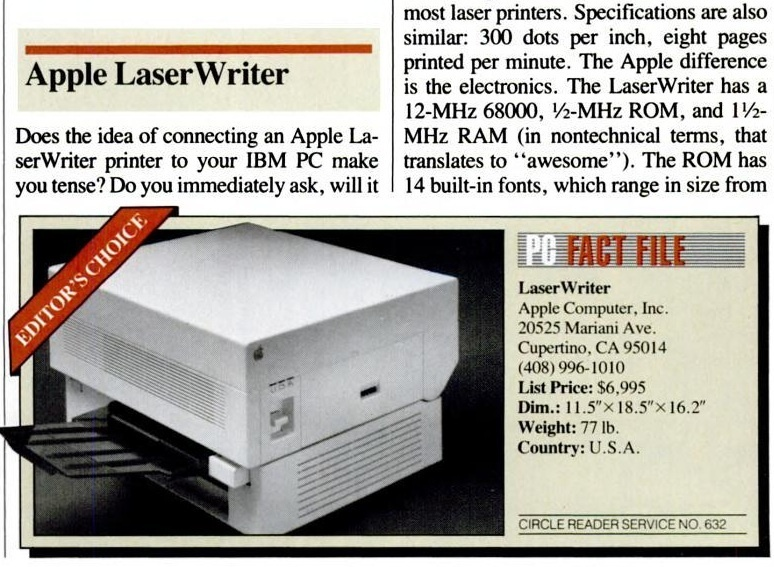
The humanoid engine in 2026 is at Purdue and at every other lab that bought a G1. The prospectus says 5,511 humanoids shipped in 2025, most into research. Whatever the humanoid's calendar-and-contacts turns out to be, it may well be found by someone who owns a G1 and is walking it around imagining what it might be used for, not by an operator running a closed pilot for one customer. Sellers get to be the substrate for discovery. Operators have to make the discovery themselves, and the record of manufacturers finding the use for their own machine, from Xerox to Honda, is poor.
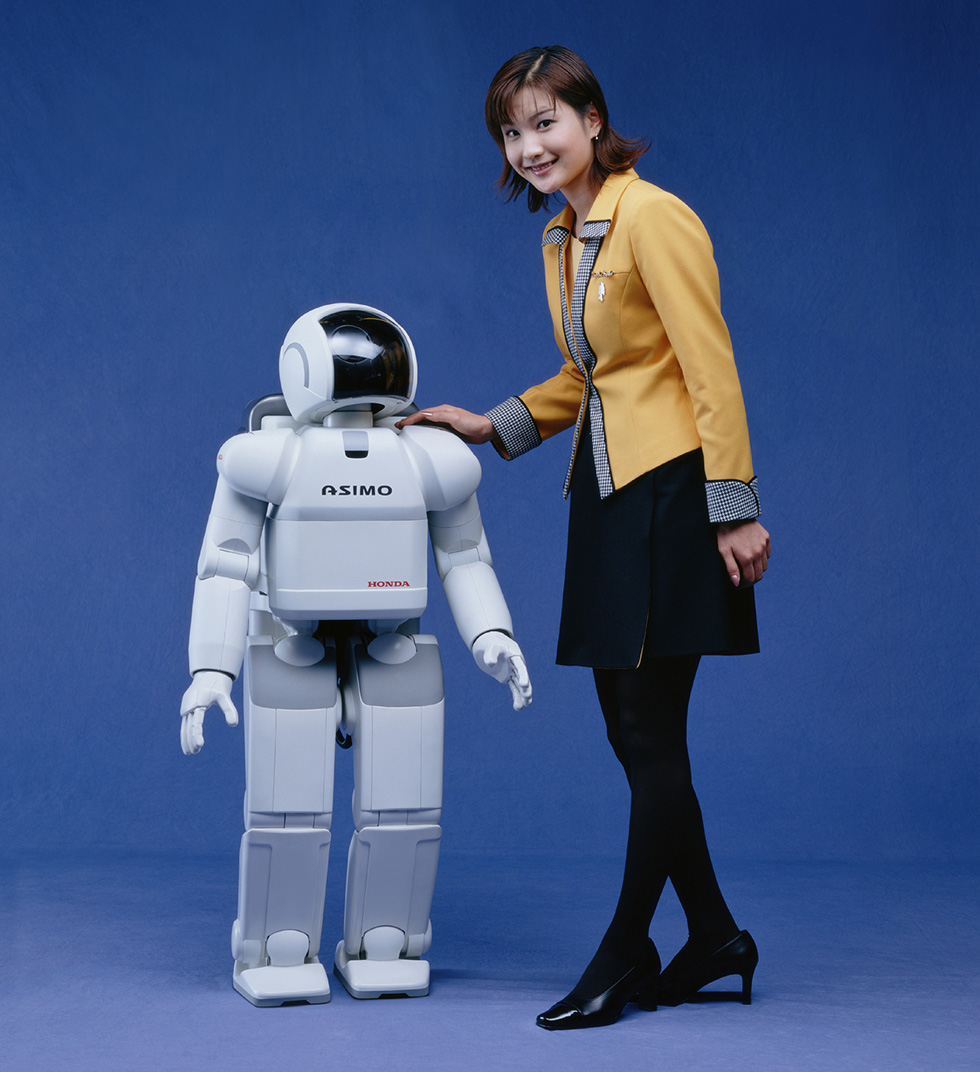
The FCC rule bars new models. It does not cap units. Every G1, H2, R1, Go2, B2, and A2 certified before July 28, 2026 can be imported in any quantity, and a waiver lets those models take firmware updates through the start of 2029. If a use is discovered on a G1 in an American lab, it will have been discovered on the one foreign body still legal to ship at scale. Other foreign competitors are locked out.
The operators get something from the rule too. They get protection from foreign operators, and they get to keep their brains proprietary. What they don't get is the discovery. If an American operator layer forms outside Figure, Agility, and Tesla, the rule guarantees it forms either on grandfathered Unitree bodies or on bodies sold by a new American supplier. Those are the only bodies an American startup can buy.
The operators can't become body suppliers, for the same reason Xerox couldn't become Canon: the whole company is built around the lease. Selling bodies would mean competing with their own fleets and arming their rivals. So if the function arrives before an American seller has a factory, the body that ships is the one already certified and already cheap, and the buyers will be the independent operators the seller model created.
The rule could make the grandfathered Unitree body the Canon engine of the American humanoid market: the only imported body an American company can legally build a product on, present in every lab where the function might be found, and the only one whose maker can supply the volume once it is. Galbot already runs this playbook in China, buying Unitree bodies and reselling them with a brain. An American Galbot would have to build on a G1, because a G2 can't come in and a Figure can't be bought.
The United States has certified in its own gazette that no domestic instrument of this kind exists, frozen the foreign supply at the models its own scientists use, and left the seller of those models free to ship as many as anyone will buy, while its own manufacturers have chosen a business model that keeps their machines out of the labs. If the function question is answered in America, it will be answered on a Unitree body, by someone who owns it, under a rule that keeps every newer competitor out. The printer story says that is the position from which a body maker wins, if the G1 turns out to be body enough for whatever the function is.
The Puppet
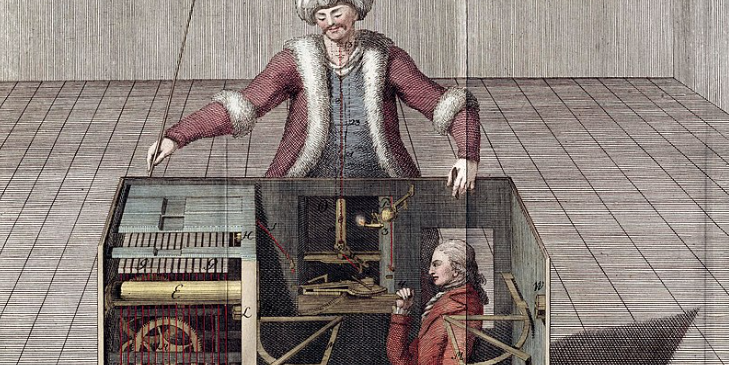
In ancient Greek theater, an unexpected savior that resolves a seemingly unsolvable plot is known as a deus ex machina: literally "god from the machine." The god was lowered onto the stage by a crane, an engineering marvel at the time, much as humanoids are today.
The market is pricing in its own deus ex machina for the humanoid question. Unitree's valuation rests on growth well beyond today's developer-kit business: useful applications, much greater demand, and the ability to supply that demand profitably.
Further cost-cutting, better training data, and successful pilots could answer the function question. To put a scale on that expectation, I worked backward from Unitree's offer price and first-day close to the number of humanoids it would need to sell in 2035.
At the RMB 150.80 offer price, my model requires roughly 395,000 annual humanoid sales by 2035, or 4% of BofA's projected market. At the RMB 845 first-day close, that rises to 2.59 million, or about 26%. This uses a 21.4% operating margin, a 7.62% discount rate, and flat revenue after 2035. Against Bain's smaller base-case market, the first-day-close requirement would be about 43% of global sales. The trading valuation therefore asks Unitree to become a major supplier of humanoid bodies. It does not tell us how much operators will outsource or how much of that business Unitree will win.
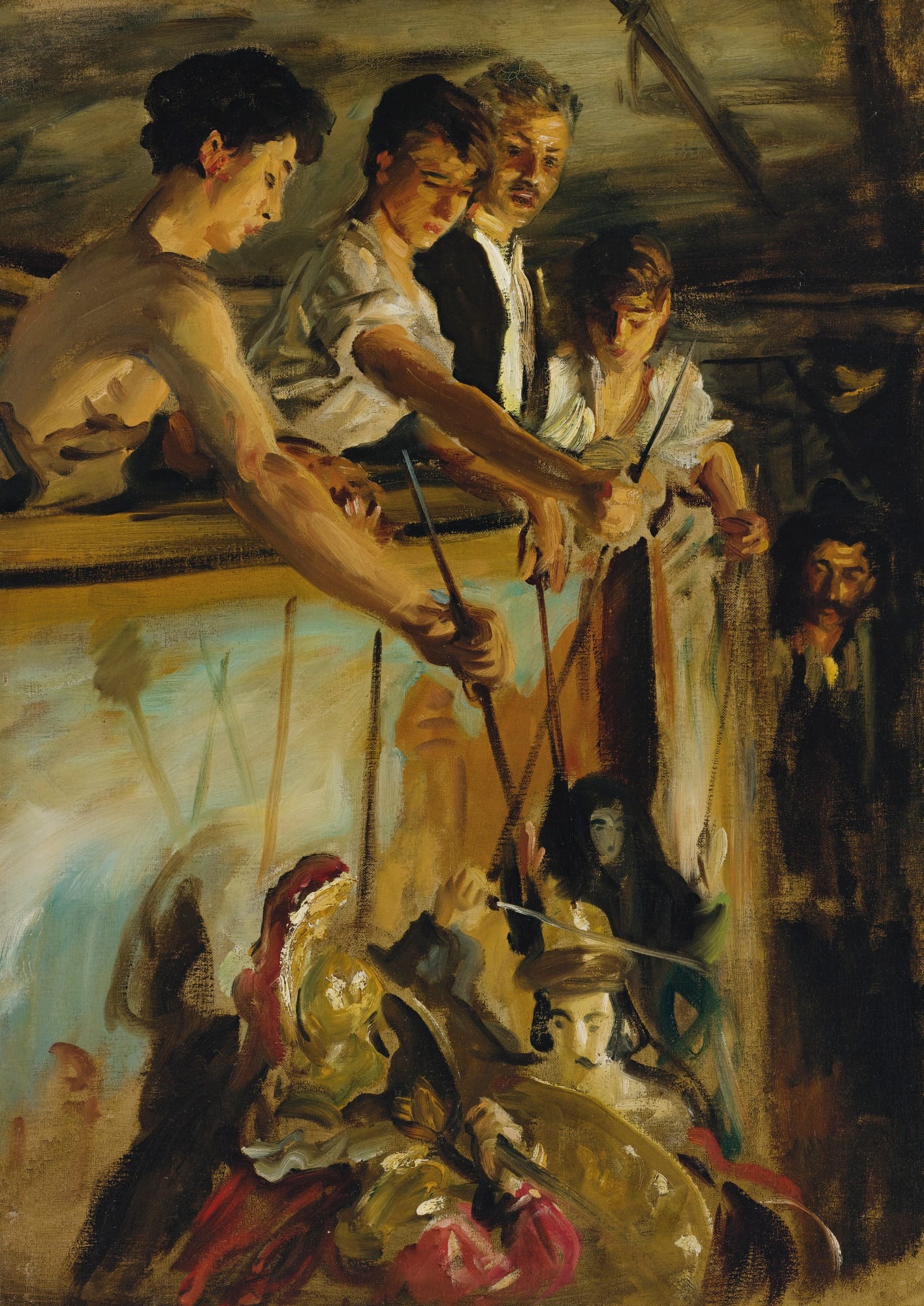
In this market the body is the puppet, the operator that buys it is the puppeteer, and Unitree is the puppetmaker. For the puppetmaker, discovery pays when it leads to repeat orders and durable manufacturing profits.
Valuation calculations and sources
RMB billions unless stated. Both prices are compared on August 19, 2026, using the same operating assumptions, exchange rate, and discount rate. The offer column is a listing-date comparison at the historical offer price. Calculations checked September 5, 2026.
1. Value attributed to humanoids
| Item | Offer price | First-day close |
|---|---|---|
| Share price, RMB 1, 2 | 150.80 | 845.00 |
| Shares outstanding 1 | 404,464,340 | 404,464,340 |
| Equity value | 60.993 | 341.772 |
| Less net financial assets | 8.476 | 8.476 |
| Less quadruped/component business value | 1.873 | 1.873 |
| Humanoid operating value required | 50.645 | 331.424 |
Net financial assets are reconstructed from year-end 2025 balances and rounded net IPO proceeds 3, 4:
| Component | RMB bn |
|---|---|
| Cash | 1.419258 |
| Trading financial assets | 0.282231 |
| Long-term deposits | 0.882790 |
| Deposits maturing within one year | 0.010899 |
| Less restricted cash | (0.006246) |
| Less current and noncurrent lease liabilities | (0.030247) |
| Net IPO proceeds | 5.917000 |
| Net financial assets | 8.475686 |
The January-August cash adjustment is zero. This is an approximation, not a reported listing-day balance. No separate value is assigned to minor equity investments or residual other businesses.
The other-business estimate uses ABB Robotics' announced transaction multiple 9:
EV/revenue = $5.375bn / $2.3bn = 2.33696x
Unitree quadruped/component value = (0.6976256 + 0.1037367) × 2.33696 = 1.872749
Applying ABB's multiple to Unitree is a comparability assumption. All humanoids, including research models, remain in the humanoid DCF.
2. Reference inputs
- Global annual shipments
- BofA's 2026-2035 schedulePublished forecast 5
- Unitree's market share
- One percentage across forecast yearsSolved variable; constant-share convention
- Starting ASP
- RMB 166,400 in 2025Reported realized price 3
- 2035 ASP
- $20,000 = RMB 135,708Bain's rounded $120bn / 6m-unit figures; FX conversion 6, 7
- Annual ASP path
- Geometric decline of 2.0182%Interpolation between those endpoints
- EBIT margin
- 21.4% throughoutFANUC, year ended March 2026 8
- Cash tax rate
- 25%Standard China rate; long-term modeling choice 13
- Sales / invested capital
- 1.48xGlobal machinery, January 2026; rounded 10
- Discount rate
- 7.6197%Calculation below
- Terminal growth
- 0% from 2036Flat nominal revenue and unchanged margin
Bain's industry price and FANUC's consolidated margin are applied as proxies for Unitree. FANUC includes automation and service businesses. There is no separate service-revenue uplift, operator labor revenue, or additional success-probability multiplier.
The discount rate uses a debt-free operating benchmark, a cash-corrected machinery beta of 1.33, and country-risk exposure of 1.0 12, 13, 14, 15:
RMB risk-free rate = 1.6838% government yield − 0.60% sovereign spread = 1.0838%
Discount rate = 1.0838% + 1.33 × 4.23% mature-market premium + 0.91% China premium = 7.6197%
This is a machinery-risk benchmark. The alternative discount rates below are author-selected sensitivities; 11% is not a published estimate for Unitree. FX is fixed at RMB 6.7854 per dollar; all modeled cash flows are nominal RMB.
3. Annual schedule
The global shipment column is transcribed from BofA 5. Unitree volumes are the reverse-DCF solutions. FCF includes growth investment.
Market shipments and selling price
| Year | Global units, m | ASP, RMB |
|---|---|---|
| 2026 | 0.09 | 163,042 |
| 2027 | 0.29 | 159,751 |
| 2028 | 0.50 | 156,527 |
| 2029 | 0.80 | 153,368 |
| 2030 | 1.20 | 150,272 |
| 2031 | 1.80 | 147,240 |
| 2032 | 2.70 | 144,268 |
| 2033 | 4.50 | 141,356 |
| 2034 | 7.00 | 138,503 |
| 2035 | 10.00 | 135,708 |
Required Unitree shipments, units per year
| Year | Offer price | First-day close |
|---|---|---|
| 2026 | 3,557 | 23,329 |
| 2027 | 11,462 | 75,171 |
| 2028 | 19,763 | 129,605 |
| 2029 | 31,620 | 207,367 |
| 2030 | 47,430 | 311,051 |
| 2031 | 71,145 | 466,576 |
| 2032 | 106,718 | 699,865 |
| 2033 | 177,863 | 1,166,441 |
| 2034 | 276,676 | 1,814,464 |
| 2035 | 395,251 | 2,592,091 |
Free cash flow, RMB bn
| Year | Offer price | First-day close |
|---|---|---|
| 2026 | 0.034 | (0.504) |
| 2027 | (0.551) | (3.617) |
| 2028 | (0.356) | (2.337) |
| 2029 | (0.408) | (2.677) |
| 2030 | (0.395) | (2.592) |
| 2031 | (0.581) | (3.809) |
| 2032 | (0.854) | (5.598) |
| 2033 | (2.550) | (16.722) |
| 2034 | (2.754) | (18.061) |
| 2035 | (1.741) | (11.418) |
2026 volumes are full-year equivalents; only 134/365 of modeled 2026 cash flow is valued after August 19. The constant-share offer case implies fewer 2026 units than the roughly 5,215 implied by 2025 humanoid revenue at the reported ASP. Note that this differs from the 5,511 humanoids shipped in 2025 cited in the article, which is the prospectus unit count; the gap between shipped units and revenue-implied units is not reconciled here, and the model uses the revenue figure. No capital release is credited for that decline. This is a scale calculation, not a separate near-term sales forecast.
4. Cash flow and solution
Let s denote Unitree's share, Q the published global shipments, A the selling price, R revenue, and I growth investment. Amounts below are in RMB bn.
A(year) = 166,400 × (135,708 / 166,400)^((year − 2025) / 10)
R(year) = s × Q(year) × A(year) / 1,000,000,000
NOPAT(year) = R(year) × 21.4% × (1 − 25%)
I(year) = max[R(year) − R(previous year), 0] / 1.48
FCF(year) = NOPAT(year) − I(year)
Opening 2025 humanoid revenue is 0.8678319 3. The sales-to-capital method estimates net capex plus working-capital investment together; these are not deducted a second time. R&D remains inside the operating margin. Applying an industry capital-stock ratio to incremental growth is a modeling assumption 10, 16.
Discounting is at year-end. Set f = 134/365 and t(year) = f + year − 2026. Multiply 2026 FCF by f; later years are full periods.
PV of forecast cash flow = sum[FCF(year) / (1 + 7.6197%)^t(year)]
Terminal FCF = R(2035) × 21.4% × 75%
Terminal value at end-2035 = Terminal FCF / 7.6197%
With zero terminal growth, incremental growth investment is zero; maintenance capex is assumed to equal depreciation. The business continues at its 2035 nominal scale. The model does not assume operations cease in 2035 16.
Solve s numerically until forecast PV plus discounted terminal value equals the humanoid value in section 1.
| Reconciliation | Offer price | First-day close |
|---|---|---|
| PV of 2026-2035 humanoid FCF | (6.146) | (41.018) |
| PV of terminal value | 56.791 | 372.442 |
| Humanoid operating value | 50.645 | 331.424 |
| Annual 2035 revenue | 53.639 | 351.767 |
| Annual FCF from 2036 | 8.609 | 56.459 |
| Solved market share | 3.9525% | 25.9209% |
| Solved annual 2035 units | 395,251 | 2,592,091 |
| Reconstructed share price, RMB | 150.80 | 845.00 |
Growth investment exceeds operating cash earnings during the buildout. Cumulative humanoid funding needs reach 10.2bn and 67.3bn, before existing cash or other-business cash flows. These costs are already deducted in the DCF; financing fees and funding constraints are not modeled. Terminal value exceeds 100% of net humanoid value because explicit-period cash flow is negative.
5. Sensitivities
Each row recalculates the DCF and solves for the share required. Unchanged inputs retain the reference values.
Discount rate
Required share of the global market
| Discount rate | Offer price | First-day close |
|---|---|---|
| 6.00% | 2.6% | 17.2% |
| 7.62% | 4.0% | 25.9% |
| 9.00% | 5.4% | 35.5% |
| 11.00% | 8.2% | 53.9% |
| 13.00% | 12.1% | 79.5% |
Required annual shipments in 2035, millions
| Discount rate | Offer price | First-day close |
|---|---|---|
| 6.00% | 0.262 | 1.718 |
| 7.62% | 0.395 | 2.592 |
| 9.00% | 0.541 | 3.550 |
| 11.00% | 0.821 | 5.390 |
| 13.00% | 1.211 | 7.952 |
Operating margin and capital efficiency
| Margin and capital benchmark | Offer share | Close share |
|---|---|---|
| FANUC / global machineryMargin 21.4%; sales/capital 1.48x | 4.0% | 25.9% |
| FANUC / China machineryMargin 21.4%; sales/capital 1.05x | 4.8% | 31.3% |
| ABB / global machineryMargin 12.1%; sales/capital 1.48x | 10.3% | 67.6% |
| ABB / China machineryMargin 12.1%; sales/capital 1.05x | 18.6% | 122.0%; exceeds market |
ABB's 12.1% is Operational EBITA, treated here as an EBIT approximation 9. China machinery's capital ratio is 1.04796x, rounded to 1.05x 11. The 122.0% result requires 12.20m units against a 10m market: that combination cannot support RMB 845 within the stated market.
Other inputs
| Change from reference | Offer share | Close share |
|---|---|---|
| 2035 ASP $15,000 | 5.2% | 34.1% |
| 2035 ASP $10,000 | 7.6% | 49.9% |
| Terminal growth 1% | 3.5% | 23.0% |
| Terminal growth -1% | 4.4% | 28.8% |
| Growth investment paid at period start | 4.1% | 26.8% |
| Net financial assets RMB 1bn lower | 4.0% | 26.0% |
| Other-business value RMB 5bn | 3.7% | 25.7% |
Price sensitivities retain the 2025 ASP and interpolate to the changed 2035 endpoint. For terminal growth g, terminal FCF is R(2035) × [(1 + g) × margin × (1 − tax) − g / sales-to-capital], discounted using a terminal denominator of rate − g 16.
6. Alternative market sizes
The same required Unitree shipment paths can be compared with Bain's rounded 2035 endpoints. These are denominator comparisons, not complete Bain annual DCFs.
| Global market in 2035 | Offer share | Close share |
|---|---|---|
| Bain base 6Approximately 6m annual units | 6.6% | 43.2% |
| BofA 510m annual units | 4.0% | 25.9% |
| Bain optimistic 6Approximately 13m annual units | 3.0% | 19.9% |
The solution measures required Unitree scale. Separating operators' outside-sourcing share from Unitree's share of those orders requires an additional assumption. No probability of industry success is estimated here.
7. Sources
- Unitree listing notice, August 18, 2026. Post-offering shares, listing date, and offer price; printed pp. 1-3.
- Reuters, Unitree's trading debut, August 19, 2026. RMB 845 closing price.
- Unitree prospectus, May 25, 2026 draft. Financial balances, printed pp. 159-160, 217, and 224-225; product revenue and ASP, pp. 198 and 200.
- Economic Information Daily, carried by Sina, August 6, 2026. Estimated net IPO proceeds of RMB 5.917bn, rounded.
- Bank of America Institute, Physical AI, Part 2, March 12, 2026. Annual global humanoid shipment forecasts; Exhibit 2, printed p. 2.
- Bain, humanoid market outlook, April 30, 2026. Rounded base/optimistic 2035 sales and market values. The $20,000 ASP is my division of its rounded figures.
- SAFE, RMB central parity rates. August 19, 2026: RMB 678.54 per $100.
- FANUC, results for the year ended March 31, 2026. Published April 24, 2026; consolidated operating margin, first page.
- ABB, agreement to sell Robotics to SoftBank, October 8, 2025. Enterprise value, 2024 revenue, and Operational EBITA margin; announced transaction terms.
- Damodaran, global capital expenditure and capital-efficiency data, January 2026. Machinery row: sales/invested capital 1.48008x, rounded to 1.48x.
- Damodaran, China capital-efficiency data, January 2026. Machinery row: 1.04796x, rounded to 1.05x.
- CFETS, government-security yields. Historical query for August 19, 2026: ten-year yield 1.6838%; checked against the page's underlying data response.
- Damodaran, country default spreads and equity-risk premiums, January 5, 2026. China sovereign spread 0.60%, country equity premium 0.91%, mature-market premium 4.23%, standard tax rate 25%.
- Damodaran, global industry betas, January 2026. Machinery unlevered beta corrected for cash: 1.33.
- Damodaran, risk-free-rate methodology. Subtracting sovereign default spreads from local government yields; slide 42.
- Damodaran, growth, reinvestment and terminal-value methodology. Sales-to-capital reinvestment and sustainable terminal growth; slides 190, 197, and 202.
Verification: both price cases and the four margin/capital combinations reconcile to their target equity values. An independent closed-form calculation agrees with the numerical reverse-DCF solutions. Displayed figures are rounded; calculations use full precision except the explicitly rounded inputs.
The Pricepoint
Palm revolutionized form, but it also showed how a promising company becomes an overpriced stock when optimists set the price. The smartphone revolution it helped create ultimately embrittled its own product-market fit. Frontier technology moves fast, and you cannot rest on your laurels in a space developing so quickly. Unitree is more market neutral than Palm. They are banking on being the puppetmaker, not the puppeteer. Canon shows why that position is promising: Unitree sells the body cheaply, puts it in other people's hands, and lets them work out what to do with it. If those buyers find the function, Unitree is already there to supply the machines.
That is a good position for a manufacturer. It does not give the manufacturer everything built on top of it. Canon supplied the engine, while HP, Apple and Adobe sold the products and software around it. Unitree could sell millions of humanoids while its customers keep most of the money those humanoids earn. The printer story favors Unitree, but it also puts a limit on what investors should expect from selling the box, especially with strict policy and emerging competition.
The reverse DCF makes that distinction concrete. At the offer price, Unitree needs about 4% of BofA’s projected 2035 market at a 21.4% operating margin. At the first-day close, it needs 26%. Raising the discount rate to 11% takes that requirement to 54%. These are very different bets on the same company. The offer asks Unitree to become a successful supplier. The close expects it to dominate the market while preserving a margin that its low prices and powerful customers could steadily erode.
About RMB 280 billion separates the two valuations. No function was found between the offer and the close. No customer demonstrated a profitable fleet. The market simply became willing to pay much more for the possibility.
That is where Palm comes back. With only about 8% of Unitree available to trade, enthusiasm is bidding for a small supply. The September 2027 unlock will begin to test that enthusiasm against more willing sellers. It will not automatically settle the valuation, but by then the business will have had another year to give investors something more firm: useful work , paying customers, and repeat orders. Unitree needs to show investors it can become a platform.
Unitree may well become the Canon of humanoids. That is the strongest argument for the company, and the offer price makes a demanding bet on it. The first-day close leaves far less room for the years of uncertainty between selling a developer kit and supplying an industry. Palm had already found something people wanted to do with its machine. Even that was not enough to justify what investors paid.